HERWICT - Human Exposure to Radiation from new Wireless Communication Technologies using Advanced Electromagnetic-Thermal Dosimetry Models
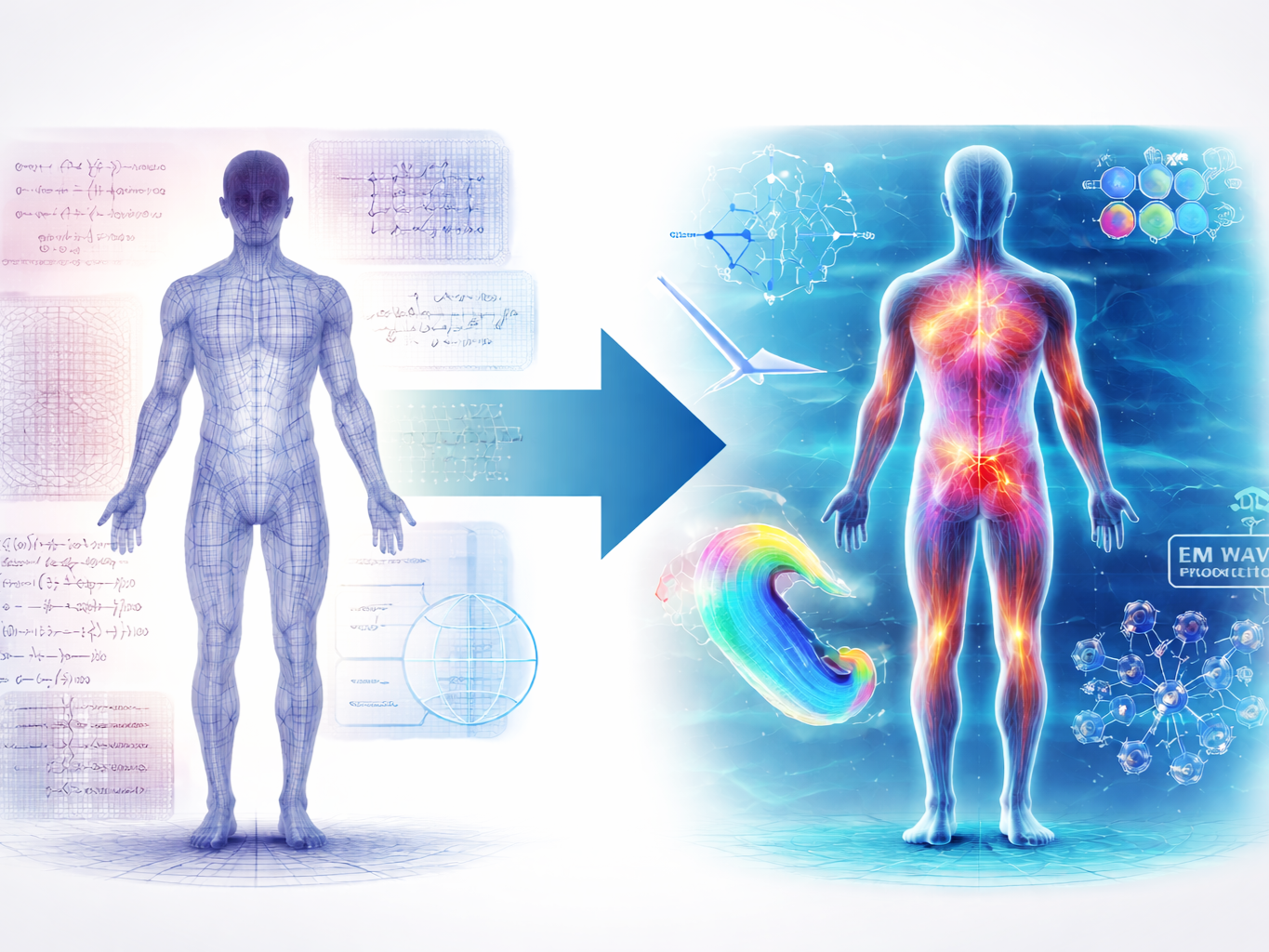
5G mm-wave systems require more antennas and raise public health concerns, prompting further research. This project develops realistic electromagnetic-thermal dosimetry models combining deterministic and stochastic methods, validated against head phantom experiments. Fast approximate models using physics-informed neural networks are proposed for practical applications without supercomputers.




Project Phases
- Development of deterministic simplified/realistic models of EMI
- Publish results in 4 conference papers
- Create database of spatial distribution of EMI fields
- Generate report on organized work meeting
- Document measurement procedures for incident/internal dosimetry
- Report on measurement results + conference paper
- Database of experimental/computational results + comparison report (journal Q1-Q3)
- Check results against exposure limits + report/conference paper
- Develop simplified deterministic tissue models (conference/journal Q1-Q2)
- Publish results from homogeneous non-planar deterministic-stochastic tissue models
- Prepare comparison report (journal Q1-Q4)
- Generate report on organized work meeting
- Develop realistic deterministic tissue models (conference/journal paper)
- Publish report on measured results on head phantom (conference paper)
- Compare calculated/measured results for head exposed to GHz radiation (journal Q1-Q2)
- Develop deterministic-stochastic model for EMI sources (conference paper)
- Develop stochastic models for simplified/realistic tissue models (journal Q1-Q2)
- Develop realistic stochastic-deterministic tissue models (journal Q1-Q2)
- Check internal dosimetry results against exposure limits (conference paper)
- Generate report on organized work meeting
Project Objectives
Future wireless communication technologies, including 5G and 6G, operate in the GHz/millimeter-wave frequency range and aim to provide high-quality service (QoS) with data rates up to 10 Gbps using mMIMO antennas and beamforming. These systems require a larger number of antennas and have limited signal propagation through obstacles, meaning users must be close to the signal source.
Beyond QoS, safety is a critical concern, as electromagnetic waves in this frequency range have wavelengths comparable to human organs, causing primarily surface heating due to shallow skin penetration. This can potentially harm biological tissue, highlighting the need for advanced dosimetric approaches.
The main objective of this research is to develop a comprehensive model of human tissue response to exposure from new wireless technologies, in line with Slovenia’s smart specialization strategy and IEEE/ICNIRP guidelines. Above 6 GHz, exposure is quantified using absorbed power density (Sab), related to surface temperature rise, while below 6 GHz the Specific Absorption Rate (SAR)—the energy absorbed per unit mass of tissue—is used.
Current numerical models rely on voxel-based FDTD methods, offering detailed anatomical representation but suffering from staircasing errors and numerical uncertainties. Therefore, improved modeling approaches are required to accurately assess electromagnetic exposure and thermal effects on human tissue.
We propose a novel approach to model blood flow as a multiphase system, accounting for deformable red blood cells and heat transfer in tissues.
To assess HF dosimetry for 5G systems, we will develop conformal computational methods, including the boundary element method (BEM), finite element method (FEM), and a hybrid BEM/FEM approach.
The main goal will be achieved through three specific objectives: simulating multiphase blood flow, developing conformal methods for HF dosimetry, and creating a coupled heat transfer model in tissue.
A key consideration in developing numerical models of human exposure to wireless technologies is the stochastic nature of input parameters, which include both the characteristics of the radiation source and human tissue. Deterministic models assume fixed average values, but real tissues vary with age, health, and gender, and measurements are often limited to in vitro data. Similarly, radiation sources exhibit uncertainties, such as antenna position, orientation, and in 5G/6G, dynamic beamforming patterns.
To account for these uncertainties, some input parameters are treated as random variables (RVs) and stochastic methods, particularly the Stochastic Collocation (SC) method, are used to propagate input variability to outputs. This enables the calculation of confidence intervals, stochastic moments, and sensitivity analysis to identify parameters with the greatest impact.
Model validation will use dynamic thermography and incident field dosimetry. Thermography provides surface temperature measurements reflecting bio-heat transfer, while dosimetry measures 5G radiated fields with methods adapted for continuous spectra, both indoors and outdoors.
The expected scientific contributions include novel mathematical formulations, efficient numerical methods, and theoretical and experimental findings relevant to environmental and human safety. The results will inform new standards and guidelines for human exposure to non-ionizing electromagnetic fields and will be of interest to researchers, engineers, biomedical scientists, and industry stakeholders.
Rationale for Modeling Approaches
To accurately model human tissue response to new wireless technologies, the project combines three advanced approaches:
1. Multiphase blood flow simulations account for the deformation, rotation, and translation of red blood cells, going beyond simple effective-fluid approximations or conventional Euler-Euler/Euler-Lagrange models.
2. Conformal methods for high-frequency (HF) dosimetry, such as BEM, are used to reduce numerical errors like staircasing and avoid volume meshes, although they require careful handling of inhomogeneities and dense matrices.
3. A coupled heat transfer model links HF dosimetry with blood flow to simulate thermal effects in tissues.
These three approaches together provide a comprehensive, state-of-the-art model of tissue response.
The primary objectives are further supported by uncertainty analysis, experimental validation using dynamic thermography and incident field dosimetry, and reduced-order modeling.
Conferences
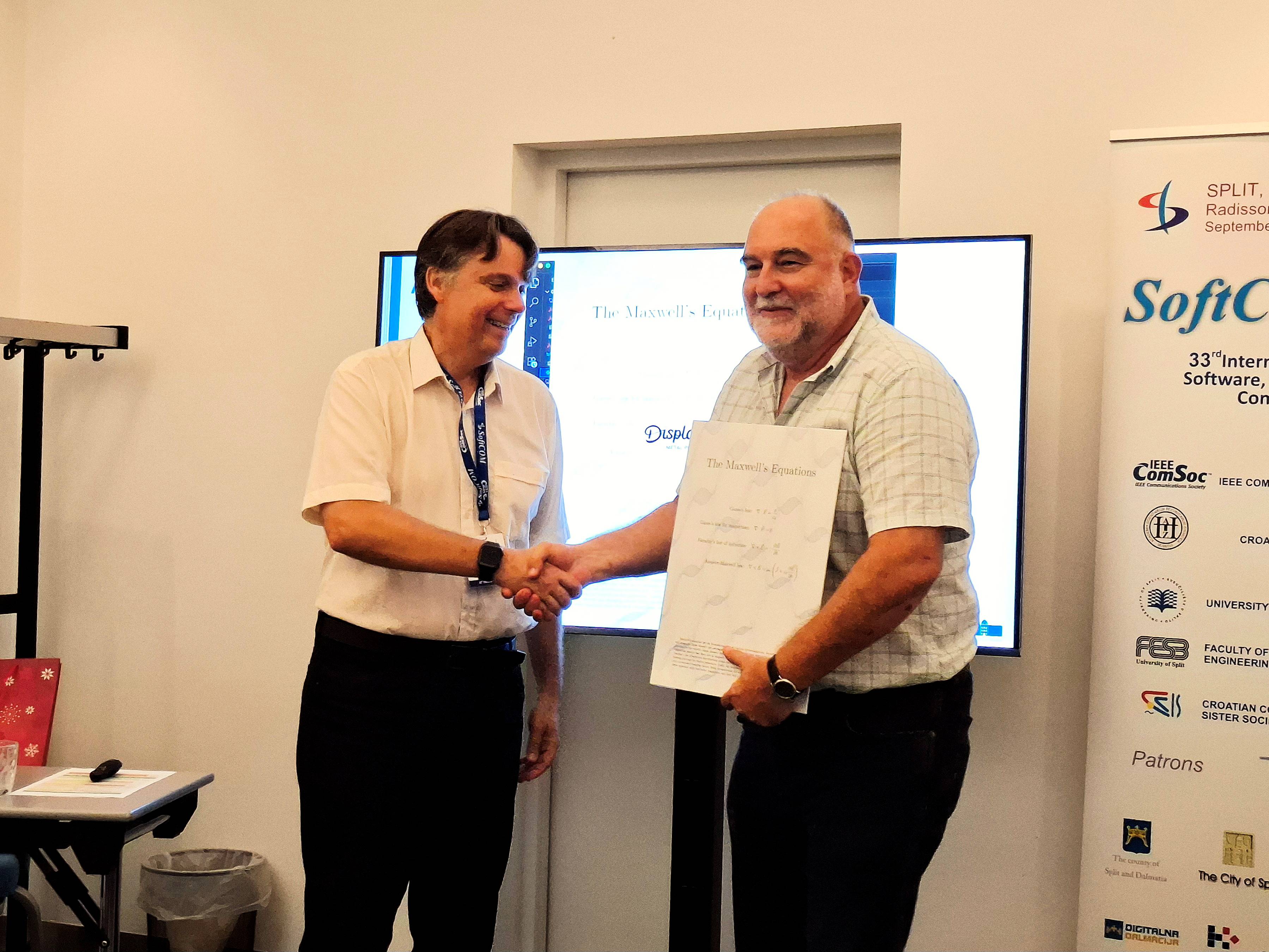
Members of the HERWICT team present the results of their research at international conferences and in scientific journals. Published papers can be found here.
5G Database
As part of the HERWICT project, a unique database has been created containing a total of 3,000 measurements of electric field strength near base stations installed throughout the Republic of Croatia. The data were collected in collaboration with the accredited testing laboratory, Center for Environmental Measurements Ltd. The analysis of the measured results is available here, and the complete research can be accessed here. Research on the calculation of electric field strength near 5G base stations is currently under review and will be published soon.
Electromagnetic Dosimetry
Coming soon!
AI-Based Fast Models
Coming soon!